The Ultimate Mardi Gras Guide

Mardi Gras is Tuesday, February 9, 2027


When is Mardi Gras 2027?

Mardi Gras 2027 Key Dates 

Fat Tuesday, or Mardi Gras Day, is February 9, 2027. The season kicks off on January 6. Between January 6 and February 9, enjoy parades, king cake, community celebrations, and more. For a list of future Mardi Gras Day dates, see here.

Why the Mardi Gras Date Changes Every Year 

Mardi Gras Day changes every year because it is tied to the date of Easter, which changes annually. In New Orleans, Mardi Gras Day always falls on a Tuesday, exactly 47 days before Easter Sunday. Because Easter can occur anywhere from March 22 to April 25, Mardi Gras Day can fall as early as February 3 or as late as March 9. Mardi Gras season always begins on January 6, Epiphany.

If You Only Have a Few Days 

It's fun to be in New Orleans throughout the Mardi Gras season, but the biggest celebrations and parades begin one week before Mardi Gras Day. A marathon of parades and super-krewes roll every single night. Prior to that week, various parades roll in neighborhoods across the city on weekends-- beginning on Twelfth Night in January. If you want to avoid crowds, come for an early season parade. Flights and hotels fill up fast, so plan your trip ASAP!

Early Mardi Gras Celebrations

Though Mardi Gras Day isn’t until February 9, 2027 the season actually begins on January 6. This means there’s several weeks of Mardi Gras magic, from parades and king cake tastings to Carnival exhibits and so much more. People flock to New Orleans in the week leading up to Fat Tuesday, but there’s so much more to experience by visiting early, like early in the season parades Krewe of Barkus, Intergalactic Krewe of Chewbacchus, and 'tit Rex. Read our guide to Early Mardi Gras here for more information.

What to Expect at Mardi Gras

Where Mardi Gras Happens Across the City

From neighborhood second lines to the major parade routes, Mardi Gras touches pretty much every part of New Orleans. When it comes to parades, the main route runs down the length of Saint Charles Avenue–parades begin rolling on Napoleon and Tchoupitoulas, before turning down St. Charles towards downtown before making a final turn on Canal Street towards the river. But there are variations in parade routes, so it’s best to check maps for individual krewes to find out the best place to watch. Beyond parades, you’ll find celebrations and gatherings in the French Quarter, Marigny, Bywater, Mid-City, and beyond.

Is Mardi Gras Free? 

It's not called the Greatest Free Show on Earth for nothin'! No tickets are needed to view parades. However, balls are invitation-only or ticketed. You can also buy passes to watch parades on grandstands, located all along the route. While this isn’t as necessary further Uptown along the route, viewing stands can be helpful if you’re staying downtown and watching parades close to your hotel. Check with your hotel and see what they recommend.

Mardi Gras Key Dates:

Mardi Gras season starts - January 6, 2027

Parades - January 6 - February 9, 2027 (select days)

Parades every night - February 3-9, 2027

Lundi Gras - February 8, 2027

Mardi Gras Day (Fat Tuesday) - February 9, 2027

Endymion - New Orleans Mardi Gras
Bacchus Mardi Gras Parade
Krewe of Bacchus

Major Krewes and their Parade Days

Focusing just on the larger parades leading up to Mardi Gras Day, you’ll find:

What is Rex?

The Rex Organization was founded in 1872, and hosted the second official parade behind Comus. It is the longest parading organization, as Comus no longer rides. The organization is credited for creating Mardi Gras royalty: Rex and his queen. Rex means king so he is known as the King of Carnival. You can spot the homes of past kings and queens of carnival by the large Rex flags hung outside. The organization is also credited with naming Mardi Gras’ official colors of purple, green, and gold, and the official royal anthem, “If I Ever Cease to Love.” The song is heard at the Rex ball, which officially closes out Mardi Gras each year. Attendance to the ball is by invitation only, but the ball can also be watched on New Orleans’ local PBS channel (which also offers a live-stream of their website). More information on the Rex Organization can be found here.

Krewe of Zulu
The Greasing of the Poles - Bourbon Street

What is Zulu?

Zulu is a Social Aid and Pleasure Club that dates back to the early 1900s. Social aid and pleasure clubs were a form of financial help for members of the African American community. The club went on to create a Mardi Gras day parade that first rode in 1915, but their major route of St. Charles Avenue and Canal Street did not appear until 1968. Before then, the parade could only travel through “back streets” in African American neighborhoods. The official costume of all riding members of Zulu is black face paint, wigs, and grass skirts.

From the beginning, the members threw coconuts, and today, they are highly sought after - although to prevent head injuries, coconuts must now be handed down instead of thrown into crowds. They were first painted gold, silver, or black to represent gold, silver, and coal, but today, they are hand-painted in elaborate colors and designs. No two coconuts are alike! The parade’s success over the years is due to the dedication of their members and community involvement. They host a Lundi Gras celebration to prepare for the big day. Zulu rolls at 8 a.m. on Mardi Gras Day, so if you want to catch the whole thing (and for a better chance at a coconut), plan to get there early for a good spot. For more information on the history of Zulu, see here.

Neighborhood and Walking Parades

Yes! Mardi Gras is truly a citywide celebration, and you’ll find everything from quirky, satirical floats pulled by horses in Krewe du Vieux (warning: the themes of this parade are definitely risque and meant for adults only), to the North Side Skull and Bones Gang who roam the streets of the Treme beginning at dawn every Mardi Gras morning. Other notable favorites are the tiny shoebox floats of the Marigny-based ‘tit Rex parade and the delightfully nerdy Intergalactic Krewe of Chewbacchus. There’s truly something for everyone–even dogs, who parade the streets of the French Quarter alongside their owners as part of the Mystic Krewe of Barkus. 

Where to Find 2027 Parade Routes and Schedules 

Find parade routes and schedules here.

Where to Stay for Mardi Gras

Where you stay during Mardi Gras depends on what you’re interested in seeing and doing. 

Hotels on the Parade Route

Whether you’ve been to Mardi Gras before or you’re planning your very first visit, staying along the parade route sets the scene for an absolutely epic Mardi Gras experience. You'll want to stay Uptown on St. Charles Avenue or downtown near Canal Street. Find our guide to hotels on the parade route here for inspiration.

Choosing a Neighborhood

Parades roll in various neighborhoods, but the main route is from Napoleon Avenue down Saint Charles Avenue in the Uptown Neighborhood to Canal Street in the Central Business District (just on the edge of the French Quarter). It is difficult to get around during Mardi Gras, so walking or biking is your best bet. You should look into a hotel or bed and breakfast along the route– St. Charles Avenue or Canal Street are good places to start, but due to their proximity, they WILL fill up fast.

If you're coming with your family, the Uptown neighborhood is recommended for lodging and parade viewing. Some hotels closer to downtown offer balcony viewing or stands for guests.

In general, you’ll find that the French Quarter is close to the action but can get crowded (and is better for adults). Hotels around Uptown and the Garden District will offer a more relaxed atmosphere while still being close to the parade route, and hotels in the Central Business District and Warehouse District are convenient for both parade access and nightlife.

How Early Should You Book? 

It's recommended to book as soon as possible! Especially if you're looking to stay on the parade route, those book up fast. Plan your trip to New Orleans here.

Mardi Gras Bucket List

Already been to Mardi Gras in New Orleans? Think you can scratch it off your bucket list? Not so fast! Before you say you’ve seen it all, here are some…

Getting Around During Mardi Gras

Walking, Biking, and Rideshares

Walking is best–public transportation such as buses and streetcars run, but their routes may be limited due to parades and they’ll oftentimes be crowded with other paradegoers. Rideshares are another good option, but like with any major event, plan for surge pricing. Biking is another great option–you can rent bikes or find the Blue Bikes at different points around the city.

Getting here: Flights, Driving, and the Amtrak Mardi Gras Route 

You'll want to book your flights well in advance. If you're driving into town, check with hotels for parking and plan to drive in well ahead of the nighttime parades. If you're arriving when parades are rolling and your hotel is on the parade route, be prepared to walk as several road closures will already be in place.

Restrooms Along the Parade Route

Another important thing to consider during Mardi Gras are restrooms. Restrooms are hard to find during parades, although there are port-a-potties stationed along the route. Having a room close to the route is a bonus for this reason. You can also usually find bathrooms at churches and schools along the routes for a small fee. They’ll also often have snacks, water, and other concessions for sale if little ones (or adults) get hungry.

Mardi Gras Accessibility

Much of Mardi Gras happens on the ground level, but it can get crowded, and sidewalks fill up well ahead of parades. For a local experience, consider going along the Uptown route on the sidewalk side and watching from further back on a side street rather than trying to get in the middle of the block on St. Charles. Also consider viewing stands or a hotel that offers viewing stands, but suggest reaching out to hotels or viewing stand owners to confirm accessibility (especially with step access). Find Wheel the World's guide here for more on accessibility in New Orleans.

What to Wear and Parade Etiquette

Costuming and Masking

Masking is a tradition during Mardi Gras. Masks were first worn to escape society and class constraints. Today, float-riders are required to wear masks by law to keep in tradition and mystery of who is in which krewe. Float-riders often wear a costume as well that matches their float’s theme.

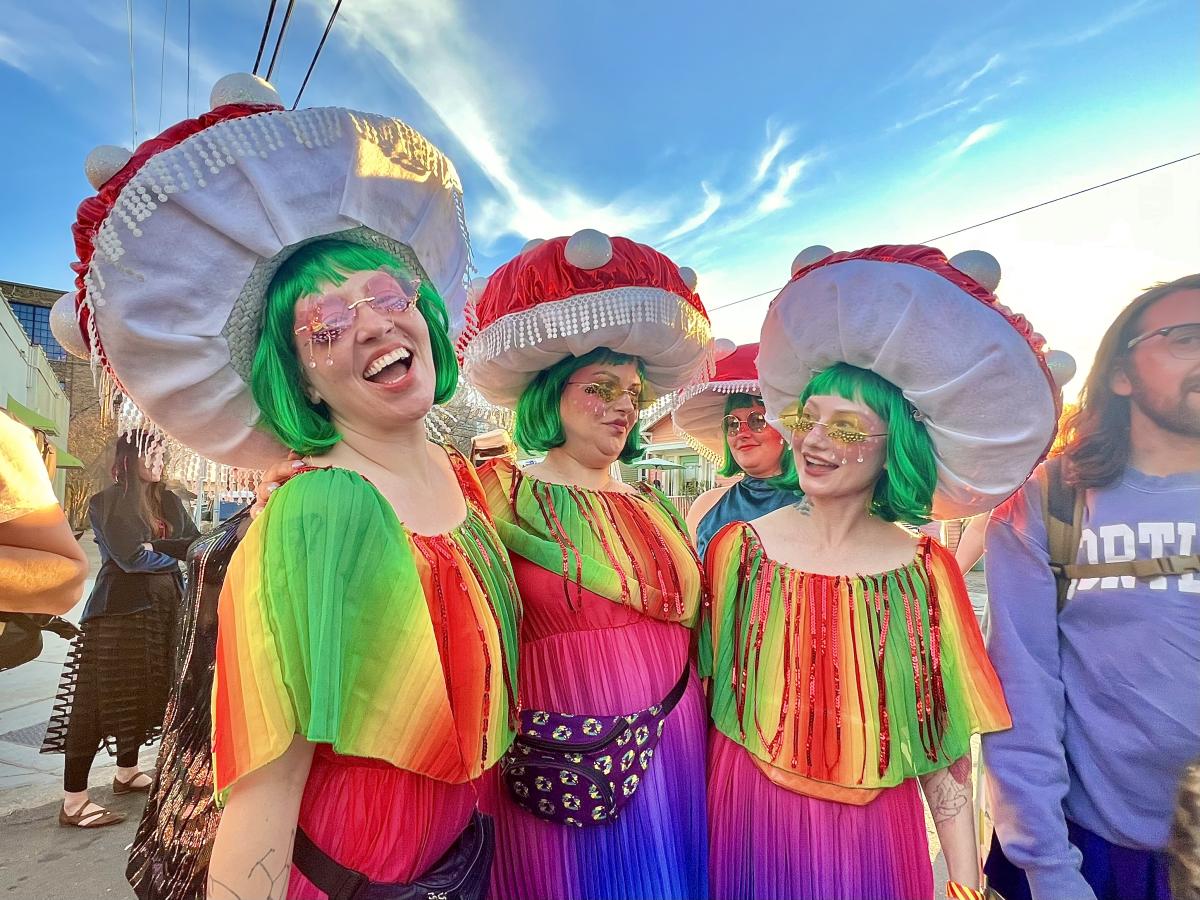
Parade-goers may be seen wearing masks as well, although that is not necessary. Costumes, however, are very common for parade-goers. Whether you’re decked out in purple, green and gold or just something fun, your costume will add to the celebration. Costumes are especially encouraged on Fat Tuesday. Otherwise, dress comfortably in closed-toe shoes! Visit our local costume shops for Carnival-inspired fashion.

What is the Weather Usually Like for Mardi Gras?

Since Mardi Gras falls on a different date every year, the weather varies. Earlier in February will be chilly, whereas at the end of February or in March will feel like a perfect spring day. Dress in layers. Always bring a jacket, especially for the nighttime parades. And even during the winter the sun is out strong, so sunscreen is a must.

What to Bring 

While many places take cards (or at least tap-to-pay), it’s still never a bad idea to have cash on hand for purchasing beverages, snacks along the route, or paying for bathroom access. Mardi Gras is full of people–and in any crowded situation, it’s always smart to have your belongings secured. We’re fans of cross-body bags for ease of personal access.

Ladder Rules and Parade Etiquette

When watching Mardi Gras parades in New Orleans, follow ladder rules and parade etiquette to help keep the route safe and enjoyable for everyone. Keep ladders at least six feet back from the curb and away from the street, and never place them where they could interfere with floats, emergency access or pedestrian traffic. Children should always be supervised on ladders, and adults should remain close by when young children are seated or standing above the crowd. Along the parade route, be courteous by allowing others to see, keeping personal belongings contained and following instructions from parade officials and law enforcement.

King Cake and What to Eat During Carnival

New Orleans is known for its food and cocktails, and Mardi Gras is no exception.

What is king cake?

King Cake is the official food of Mardi Gras. The festive Mardi Gras dessert is eaten for breakfast, afternoon snacks, and throughout the parades. The name comes from the Biblical story of the three kings that bring gifts to baby Jesus. It is a blend of coffee cake and a cinnamon roll with purple, green, and gold icing or sugar. Sometimes, they are also filled with cream or fruit. Within the cake, a plastic king cake baby is hidden for fun. Tradition says that whoever finds the baby has to buy the next king cake!

King cakes are usually available to purchase beginning on Twelfth Night until Mardi Gras day. Check out our Ultimate Guide to King Cake here for more to find authentic king cake! Find bakeries that ship king cakes here.

Where to Eat and Drink Along the Parade Route

At your convenience, there are several restaurants along the parade route that offer to-go food when parades are rolling. Find Where to Eat on the Parade Route here for more.

Open Container Rules and Go-Cups

In New Orleans, there is an open container law. Grab a drink to-go and hit the streets! Keep in mind, no glass bottles though. The plastic cups thrown at parades are great to use when you're out and about. If looking for a place to grab a beer or cocktail along the parade route, look no further than here. 

Black Masking Indians: A historical New Orleans Carnival tradition
New Orleans & Company
Black Masking Indians: A historical New Orleans Carnival tradition

The History & Traditions of Mardi Gras

A Short History of Mardi Gras

Mardi Gras has been celebrated in Louisiana since the 18th century, brought by French settlers. Today’s traditions stem from European carnival customs mixed with local culture, creating a uniquely New Orleans spectacle. 

Black Masking Indians

Also called Mardi Gras Indians, tribes made up of Black New Orleanians create stunning hand-sewn suits and hold neighborhood gatherings.

Flambeaux

Beginning in 1857, flambeauxs were used to light the Mardi Gras parade. They are still used in parades today as tradition. A flambeaux is an iron pole that lights fire on either side of it. They are carried by brave walkers, who are thrown change as a thank you. More information can be found here.

Mardi Gras Balls

Social clubs, called krewes, organize the parades and balls. Rex and Zulu are the most famous krewes on Mardi Gras Day, while Endymion, Bacchus, and Muses highlight the weekend before.

Throws, Doubloons, and What to Catch

Mardi Gras throws are one of the most anticipated parts of New Orleans parades, with krewe members tossing beads, cups, toys, stuffed animals and other signature items to the crowds. Keep an eye out for coveted throws like krewe-specific cups, doubloons, signature throws that make memorable Mardi Gras souvenirs.

Mardi Gras with Kids

Locals grow up going to Mardi Gras--it is absolutely family-friendly! The Uptown section between Napoleon Avenue and Jackson Avenue is recommended for children. Although, there are some stands downtown at hotels that are suited for children as well. You can view our Mardi Gras for Families guide for more information.

LGBTQ+ Mardi Gras

Mardi Gras is incredibly open and welcoming - it’s a citywide celebration of everything that makes New Orleans great. The LGBTQ community has put their own stamp on Mardi Gras with LGBTQ krewes, balls, and organizations. The Bourbon Street Awards, named the most famous drag queen contest in America, takes place every Mardi Gras Day and is a sight to see! To be closer to the action, LGBTQ visitors may want to book accommodations in the French Quarter, Marigny, or Bywater. 

Mardi Gras Frequently Asked Questions