NewOrleans.com's Guide to the Most Popular Historic Attractions in the French Quarter
Three centuries of New Orleans history sit within a few walkable blocks. Here's what to see, what it costs, and how to cover it on foot.
Most of the French Quarter's history isn't behind glass. It's in the buildings you're already walking past, the courtyards you catch through an open gate, and the block where the Louisiana Purchase changed hands. The trick is knowing which doors are worth opening. Follow our guide to know where to go, in which order, and how much time to plan to spend.
The French Quarter covers about 0.66 square miles, 13 blocks long and roughly six deep. Most major landmarks sit within a ten-minute walk of Jackson Square.
Louisiana State Museum sites (Cabildo, Presbytère, 1850 House) are open Tuesday through Sunday, 9 a.m. to 4 p.m. Admission is $11 for adults, $9 for seniors, military, and students, free for children 6 and under.
St. Louis Cathedral and the Historic New Orleans Collection are both free.
Allow 3 to 4 hours for a walking tour of the top sites.
What are the most popular historic attractions in the French Quarter?
The French Quarter, or Vieux Carré, is the oldest neighborhood in New Orleans and was laid out in 1721, three years after the city's founding in 1718. Two fires, in 1788 and 1794, destroyed most of the original French colonial buildings, which is why so much of what you see today is Spanish colonial or 19th-century American. Here are the sites worth your time, arranged so you can cover them on foot in a morning or afternoon.
What are the best things to see around Jackson Square?
Jackson Square, originally the Place d'Armes, faces the Mississippi River and is framed on one side by three of the city's most important buildings.
St. Louis Cathedral sits at the head of the square, the oldest continuously active Roman Catholic cathedral in the United States. The current structure dates to an 1850 rebuilding of a church completed in 1794. Entry is free during open hours; Mass times are posted at the door.
The Cabildo, to the cathedral's left, was built under Spanish rule between 1795 and 1799 and hosted the Louisiana Purchase transfer ceremonies in 1803. It later housed the Louisiana Supreme Court, where Plessy v. Ferguson originated in 1892. Three floors of exhibits cover Louisiana history. Look for Napoleon's death mask and Jordan Noble's drum.
The Presbytère, to the right, holds two permanent exhibits: "Mardi Gras: It's Carnival Time in Louisiana" and "Living with Hurricanes: Katrina and Beyond." Same hours and admission as the Cabildo.
The Pontalba Buildings line the uptown and downtown sides of the square. Built in 1849 and 1850 by Baroness Micaela Almonester de Pontalba, they are among the oldest apartment buildings in the country. Inside the Lower Pontalba, the1850 House is furnished to show how a middle-class family lived before the Civil War.
In the center of the square, the 1856 Andrew Jackson statue carries an inscription added by Union occupation forces during the Civil War. It has stayed there ever since.
Street artists, tarot readers, and brass bands set up along the iron fence daily. Come before 10 a.m. for the square without the crowds.
NOTMC Image
Old Ursuline Convent
What is the oldest building in the French Quarter?
The Old Ursuline Convent at 1112 Chartres Street, completed in 1752, is the oldest surviving building in the Mississippi River Valley and the only building left in the Quarter from the French colonial period. It outlasted both great fires.
The Ursuline nuns arrived in New Orleans in 1727 and ran a girls' school, an orphanage, and an infirmary here until 1824. The building later served as a meeting place for the Louisiana Legislature and as the residence of the archbishops of New Orleans. Today it operates as a museum alongside St. Louis Cathedral and St. Mary's Church as part of the archdiocese's Catholic Cultural Heritage Center. Visits are self-guided and include the courtyard, the formal garden, and St. Mary's next door.
Justen Williams, New Orleans & Co.
Historic New Orleans Collection
What is the best free museum in the French Quarter?
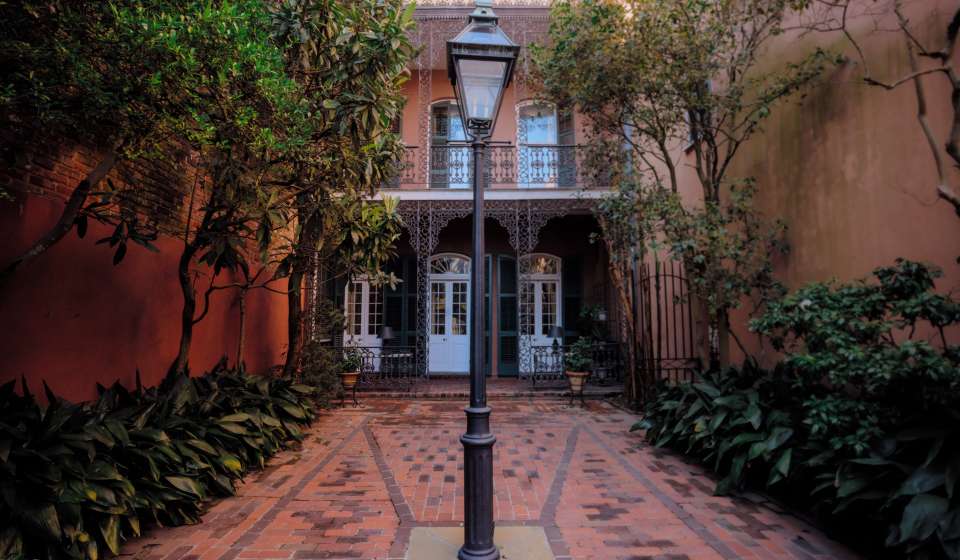
The Historic New Orleans Collection at 520 Royal Street occupies the 1816 Seignouret-Brulatour Building and a modern Tricentennial Wing, built around the Brulatour Courtyard, one of the most photographed courtyards in the city. The French Quarter Galleries are the only ongoing exhibit anywhere devoted to the neighborhood's own history, and the 360-degree film "French Quarter by Night" is worth the ten minutes. Rotating exhibits cover jazz, Carnival, Creole architecture, and the city's documentary record.
Admission is free, but you need a ticket from the front desk or reserved online. Open Tuesday through Saturday, 9:30 a.m. to 4:30 p.m., and Sunday, 10:30 a.m. to 4:30 p.m. The museum is closed on Mondays. There's a courtyard café and a genuinely good gift and book shop.
The Williams Research Center at 410 Chartres Street is also free and open to the public without an appointment, closed Sundays and Mondays.
Michelle Halpern, @livelikeitsthewknd
Exploring the French Quarter
Can you suggest a self-guided historical walking tour of the French Quarter?
Note: The following will take roughly 2 to 4 hours, depending on stops, starting at Jackson Square:
Jackson Square. Tour the Cabildo and Presbytère, step into St. Louis Cathedral, and walk through the 1850 House.
Beauregard-Keyes House, 1113 Chartres Street. An 1826 raised center-hall villa, home to P.G.T. Beauregard after the Civil War and later to novelist Frances Parkinson Keyes. Guided tours only.
Old Ursuline Convent, 1112 Chartres Street, directly across the street.
Madame John's Legacy, 632 Dumaine Street. Rebuilt in 1788 immediately after the fire, it is one of the best surviving examples of French Creole architecture in the country. Check ahead; the Louisiana State Museum has opened and closed it periodically.
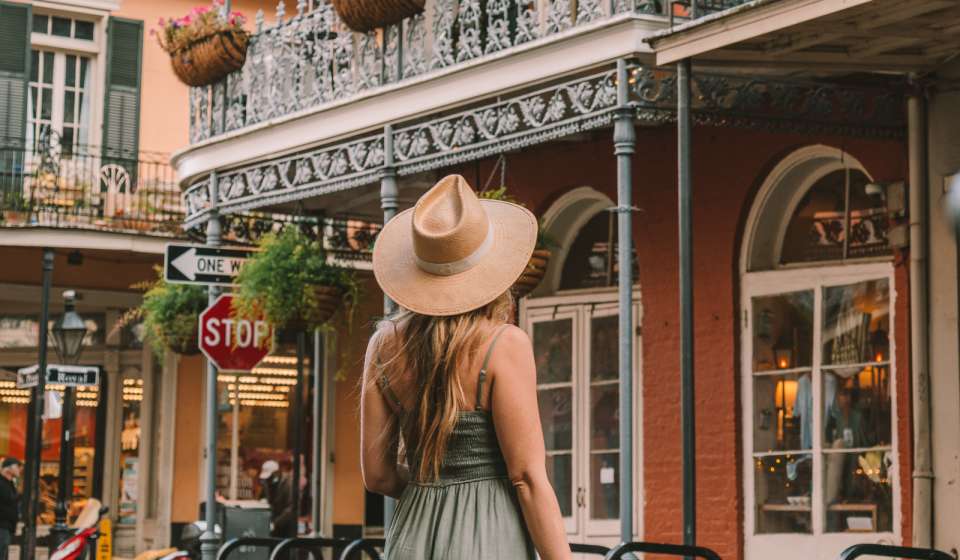
Royal Street, the Quarter's gallery and antique corridor. Between Bienville and Orleans streets, Royal closes to traffic 11 a.m. to 4 p.m. on weekdays and 11 a.m. to 7 p.m. on weekends, which is when the buskers come out.
Hermann-Grima House, 820 St. Louis Street. An 1831 American townhouse with one of the last working open-hearth kitchens in the Quarter, plus the courtyard and the quarters where the household's enslaved workers lived.
The Historic New Orleans Collection, 520 Royal Street. End here, in the courtyard, with a coffee.
Insider Tip:
Wear comfortable shoes. The sidewalks are often uneven, and the flagstones can get slick.
1
2
3
4
@StephanieGalt on Instagram
5
(1) Napoleon House, (2) Preservation Hall Jazz Band, (3) Louis Armstrong's Cornet - New Orleans Jazz Museum, (4) Faulkner House Books, (5) Lafitte's Blacksmith Shop
Which other historic sites are worth seeking out?
Napoleon House (500 Chartres Street) was built in 1794 for Mayor Nicholas Girod, and is the traditional place to stop for a Pimm's Cup. The story that Girod offered the house to Napoleon as a refuge from exile is a good one, and unproven.
Preservation Hall (726 St. Peter Street) occupies an 1817 building and has run nightly traditional jazz shows since 1961. Lines form early; tickets are worth booking ahead.
The Pharmacy Museum (514 Chartres Street) fills the shop of Louis Dufilho Jr., the country's first licensed pharmacist. Surgical instruments, apothecary jars, and a soda fountain.
Faulkner House Books (624 Pirate's Alley) is where William Faulkner wrote his first novel in 1925. Small, free to browse, and one of the quietest corners in the Quarter.
The Cornstalk Hotel fence (915 Royal Street) is the most photographed ironwork in the city, installed in the 1850s. It’s free to view from the sidewalk.
Gallier House (1132 Royal Street) was architect James Gallier Jr.'s own home, notable for indoor plumbing and gas lighting well ahead of their time.
Lafitte's Blacksmith Shop Bar (941 Bourbon Street) is one of the oldest surviving structures in the city, generally dated to the 1770s. It is a bar, not a museum, and the candlelight does the rest.
What historic sites are just outside the French Quarter?
Two are close enough to fold into the same walk.
Congo Square, in Louis Armstrong Park across Rampart Street, is where enslaved and free Black New Orleanians gathered on Sundays to trade, dance, and play music. The rhythms that took shape there run directly into jazz. The park is free and open daily.
St. Louis Cemetery No. 1 (425 Basin Street) is the city's oldest surviving cemetery, established in 1789. Since 2015, visitors have been required to enter with a licensed tour guide or an archdiocese-approved tour. You cannot walk in on your own.
1
2
3
4
5
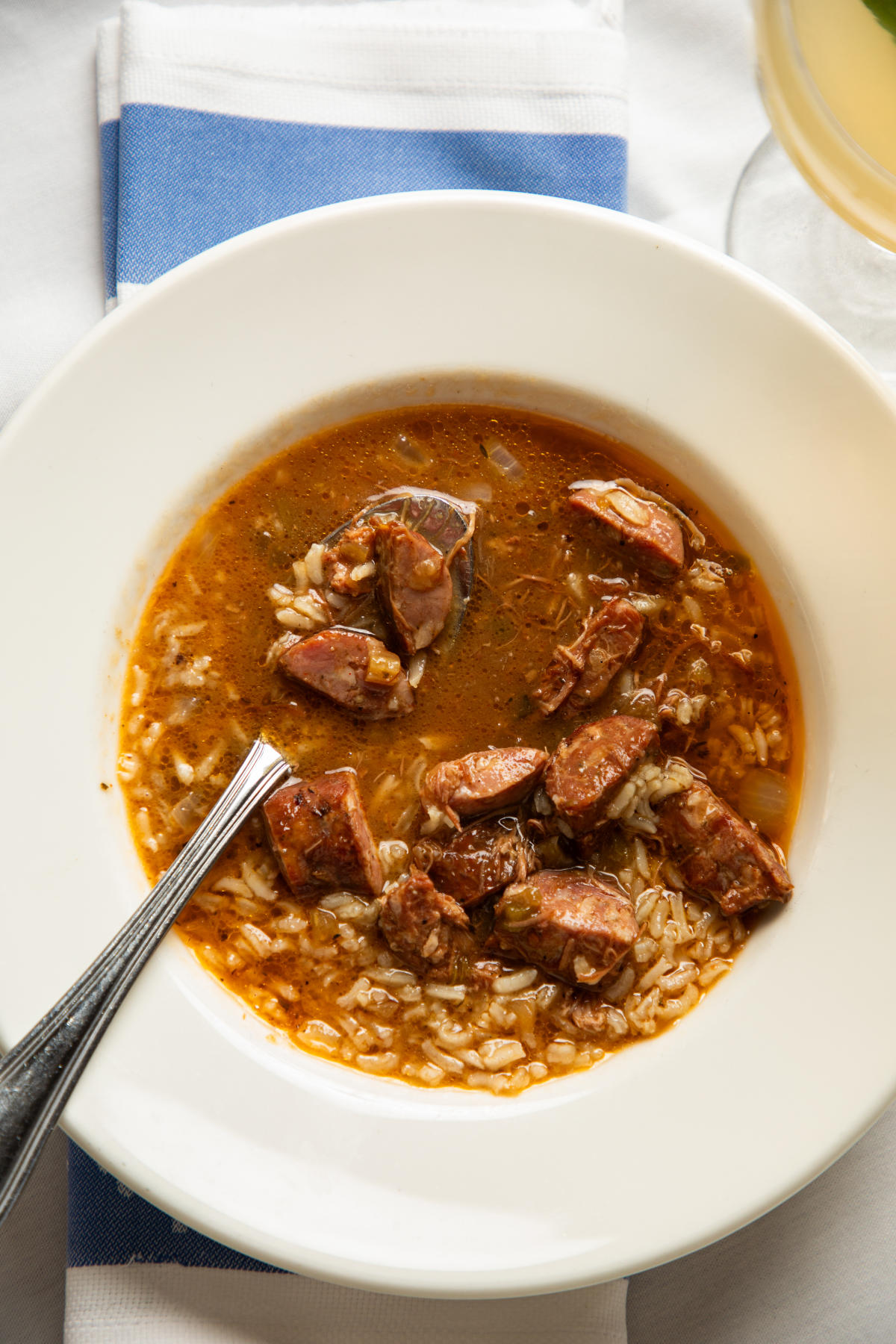
(1) Antoine's, (2) Arnaud's, (3) Muriel's, (4) Gumbo - Tableau, (5) Beignets & Cafe au Lait - Cafe du Monde
Where can you eat inside a historic building?
Antoine's (713 St. Louis Street) has been open since 1840 and is the oldest continuously family-run restaurant in the country. Pro Tip: There are 14 dining rooms, including the Rex and Escargot rooms, which staff will often show you between services.
Arnaud's (813 Bienville Street) has been open since 1918, and features a free Mardi Gras museum on the second floor displaying vintage Carnival gowns and crowns. Ask the host to see upstairs.
Napoleon House (500 Chartres Street) serves Creole comfort food in the 1794 Girod house. You'll want to order a muffuletta and a Pimm's Cup.
Muriel's Jackson Square (801 Chartres Street) features Creole dining on a site occupied since the city's founding, in a building dating to the 1790s. Ask about the famous seance room.
Tableau (616 St. Peter Street), in the Le Petit Théâtre building, features balcony seating overlooking Jackson Square.
Café Du Monde (800 Decatur Street), has been serving café au lait and beignets since 1862. It's open 7:15 a.m. to 11 p.m. Sunday through Thursday and later on weekends, and there is no better people-watching in the city.
Published by NewOrleans.com, the official visitors' guide to New Orleans.
Book a Hotel
Frequently Asked Questions - French Quarter History
What is the oldest building in the French Quarter?
The Old Ursuline Convent at 1112 Chartres Street was completed in 1752. It is the oldest surviving building in the entire Mississippi River Valley and the only structure in the Quarter remaining from the French colonial period.
Yes. Admission to the museum at 520 Royal Street is free, though you need to pick up a ticket at the front desk or reserve one online. The Williams Research Center at 410 Chartres Street is also free and requires no appointment.
What is the difference between the Cabildo and the Presbytère?
Both flank St. Louis Cathedral and both are Louisiana State Museum properties with matching hours and admission. The Cabildo covers Louisiana history broadly, from colonial rule through Reconstruction. The Presbytère focuses on two subjects: Mardi Gras and Hurricane Katrina.
Do I need a guide to visit St. Louis Cemetery No. 1?
Yes. Since 2015 the cemetery has been closed to unaccompanied visitors. You must enter with a licensed tour guide or on a tour approved by the Archdiocese of New Orleans.
What is the oldest restaurant in the French Quarter?
Antoine's, has been open at 713 St. Louis Street since 1840 and is still run by the founding family, making it the oldest continuously family-operated restaurant in the United States.
How long does it take to walk the French Quarter's main historic sites?
About 3 to 4 hours for Jackson Square, the Cabildo, the Presbytère, St. Louis Cathedral, the Old Ursuline Convent, and one or two house museums. Add shopping on Royal Street and a meal and it becomes a half-day.
Are the historic attractions in the French Quarter free?
Several are. St. Louis Cathedral, the Historic New Orleans Collection, Arnaud's Mardi Gras museum, the Jean Lafitte visitor center, and Congo Square cost nothing. Louisiana State Museum sites are $11 for adults. House museums charge separately for guided tours.
Can I see the French Quarter's historic sites with kids?
Yes. Jackson Square, the French Market, and Café Du Monde are family standbys. The Presbytère's Mardi Gras exhibit is interactive. The Pharmacy Museum's oddities tend to land well with older kids. Most house museum tours suit ages 8 and up.